
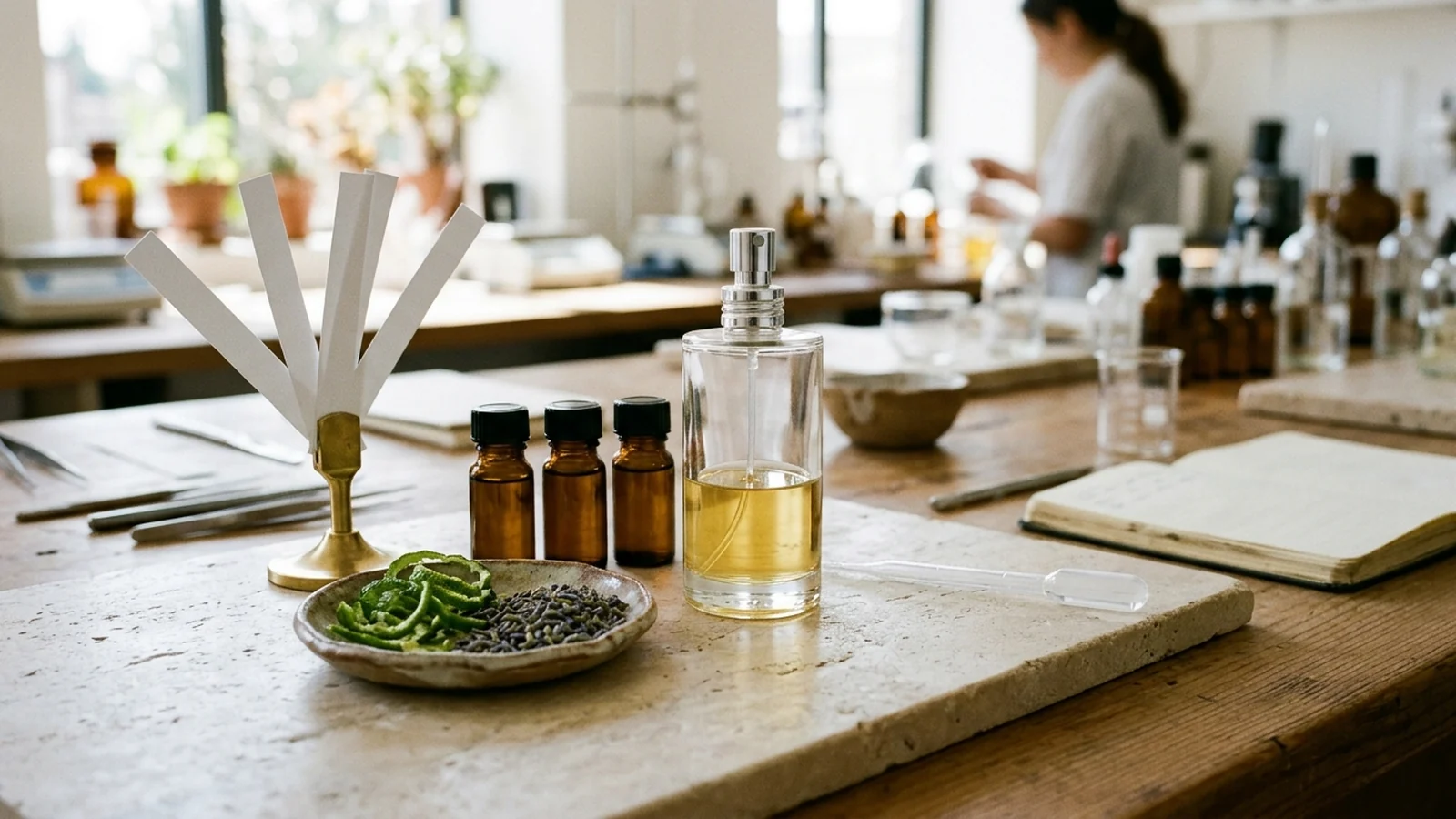
Fragrance Oxidation & Storage: Headspace Air & Control Samples
How headspace air, UV light, and heat drive fragrance oxidation, plus ISO/TR 18811:2018 reference sample storage at 5 °C (2 °C to 8 °C) in tinted vials.
How headspace air, UV light, and heat drive fragrance oxidation, plus ISO/TR 18811:2018 reference sample storage at 5 °C (2 °C to 8 °C) in tinted vials.
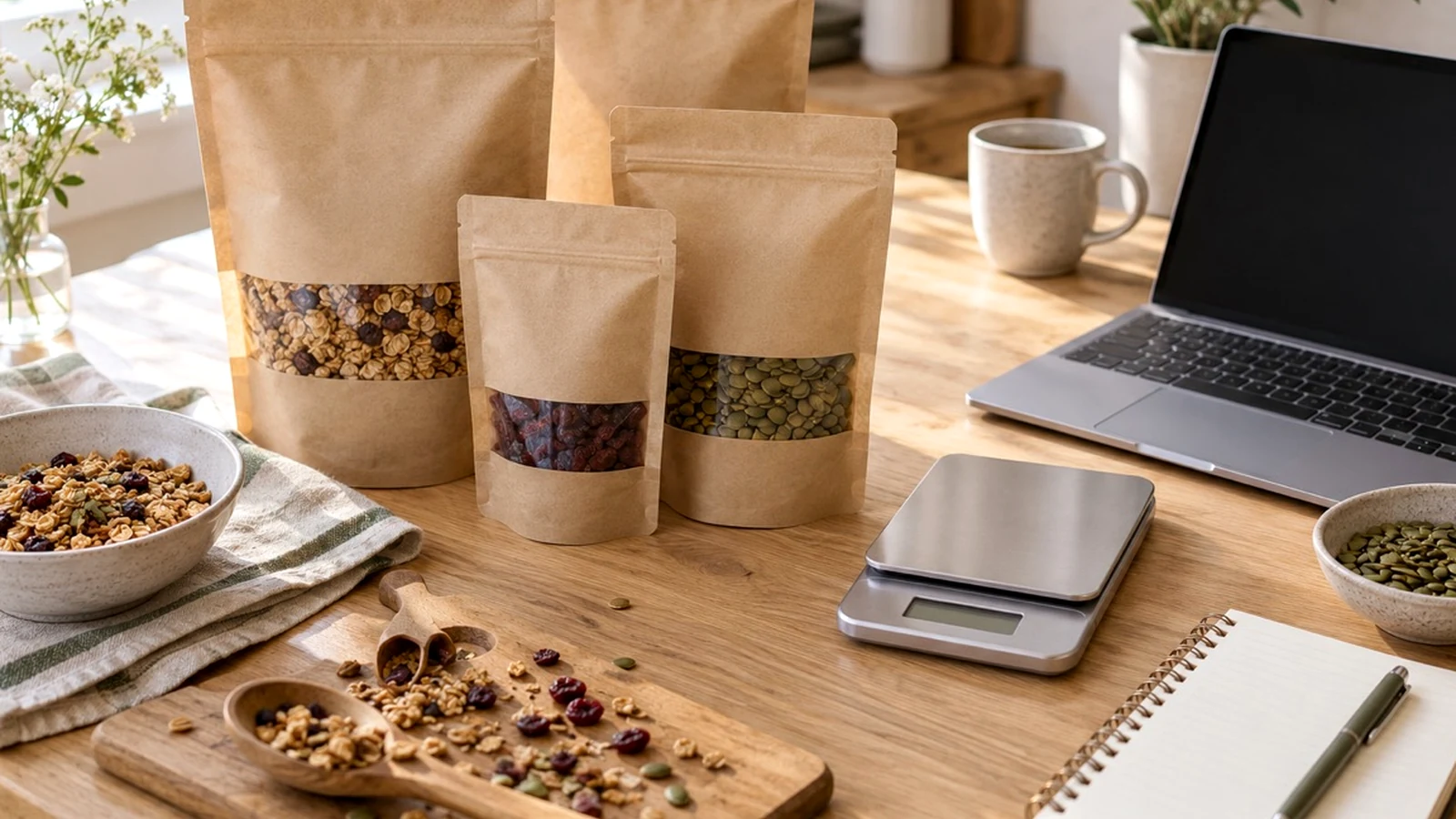
Learn how a just about right scale pairs with overall liking in penalty analysis, how to calculate mean drop and weighted penalty, and when to reformulate.
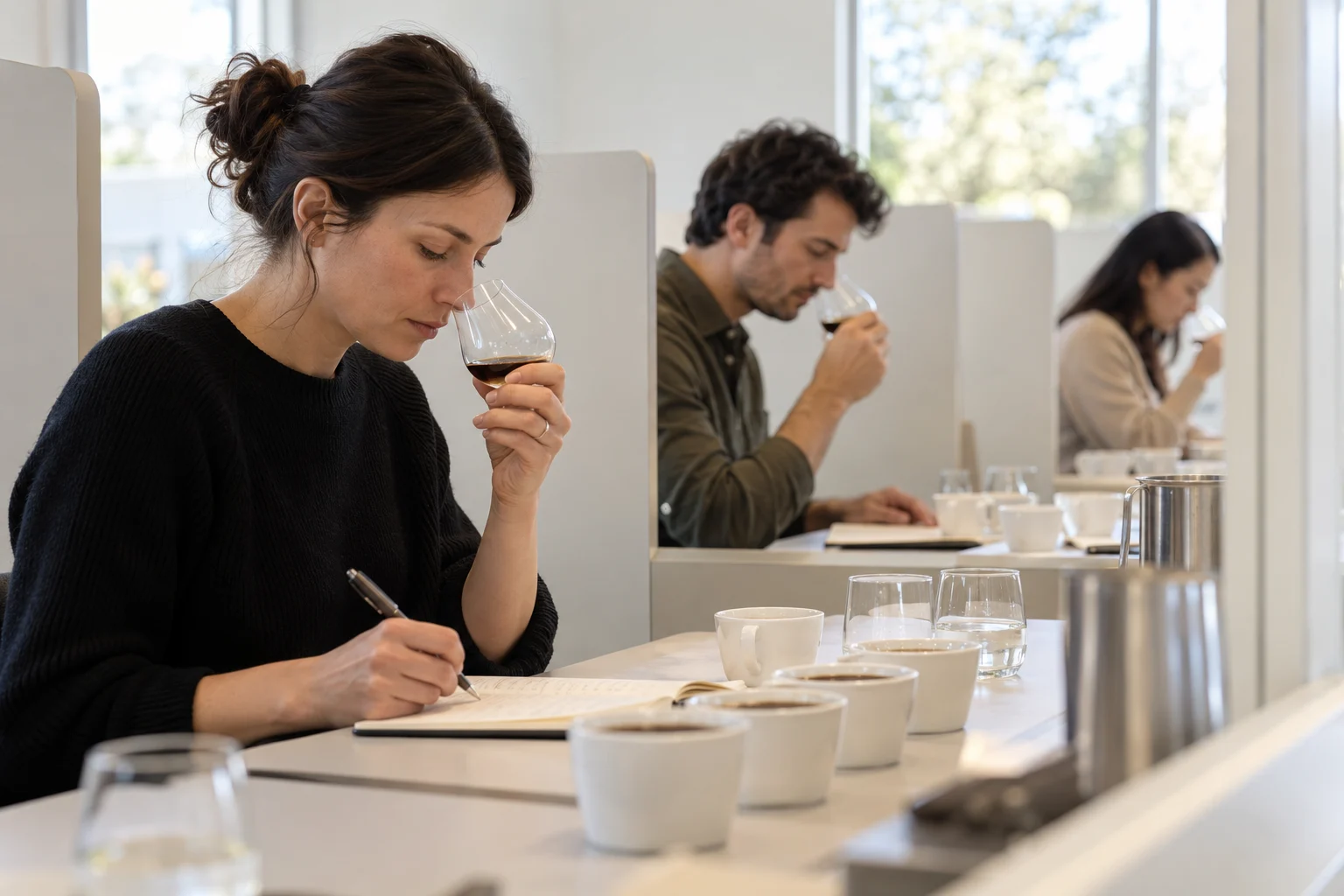
Plan your descriptive sensory analysis panel: explore lexicon development, reference standards, scale calibration, pilot evaluation and performance checks.
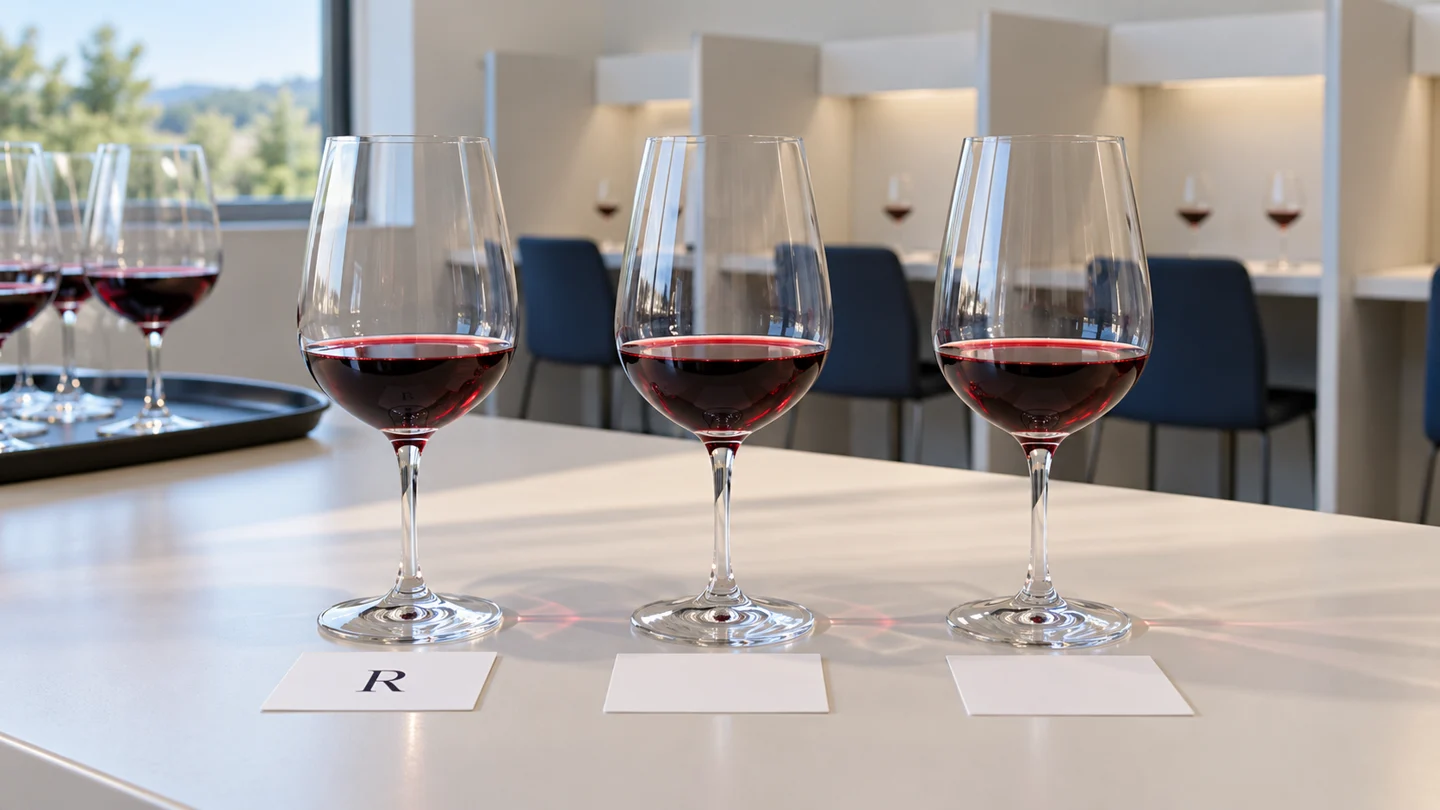
Compare the duo trio test and triangle test: reference arrangements, correct-guess probabilities, carryover limits, and a method-selection checklist.
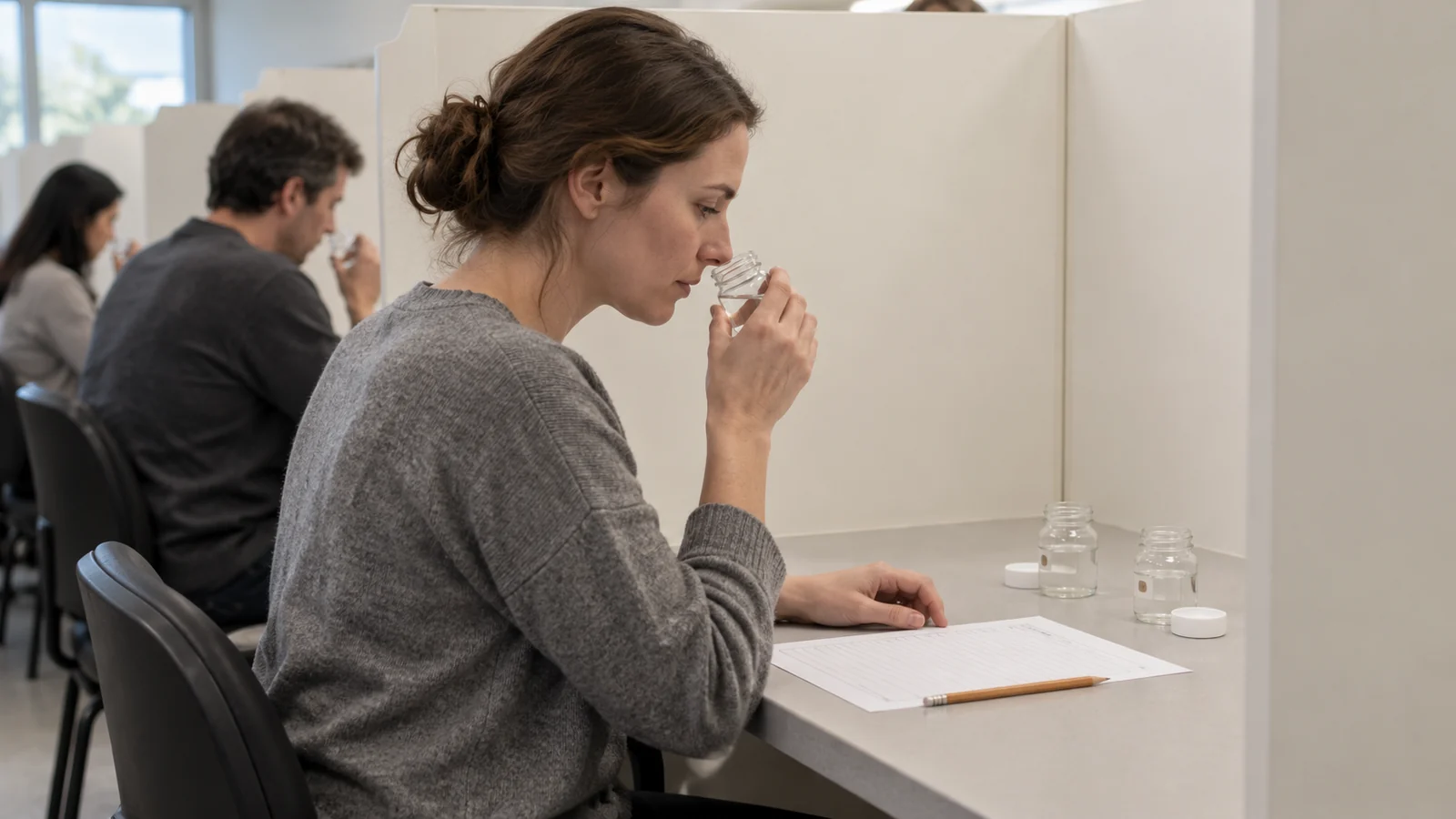
Detection finds an odor difference; recognition identifies its character. Compare panel questions, concentration steps and how to read an odor threshold report.
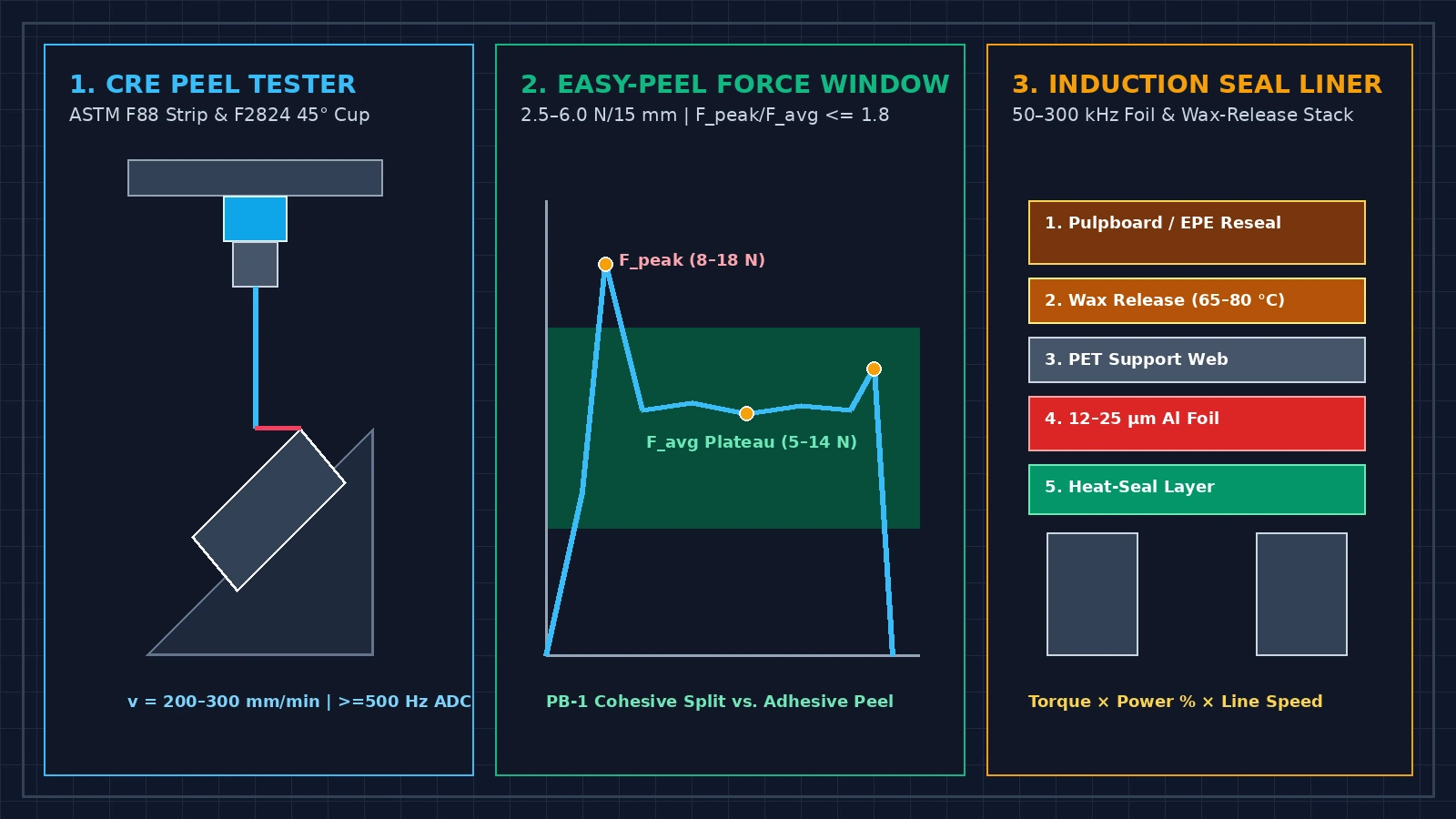
How a peel strength tester measures ASTM F88 strip peel, ASTM F2824 45-degree cup pull, easy peel lidding film force windows, and induction seal liner bonding.
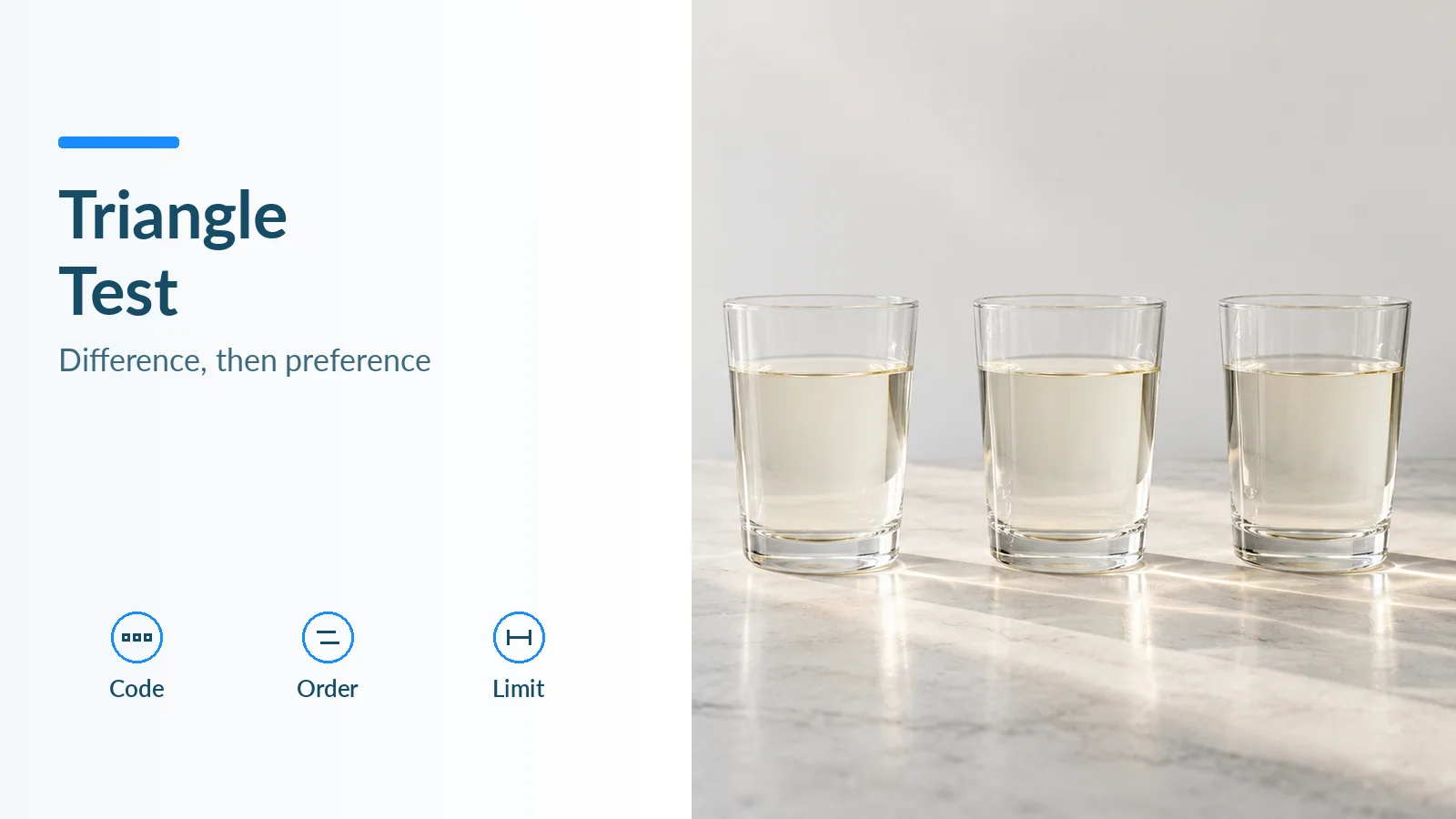
Plan a forced-choice triangle test with hidden sample identities, controlled presentation, and a clear boundary between discrimination and consumer preference.
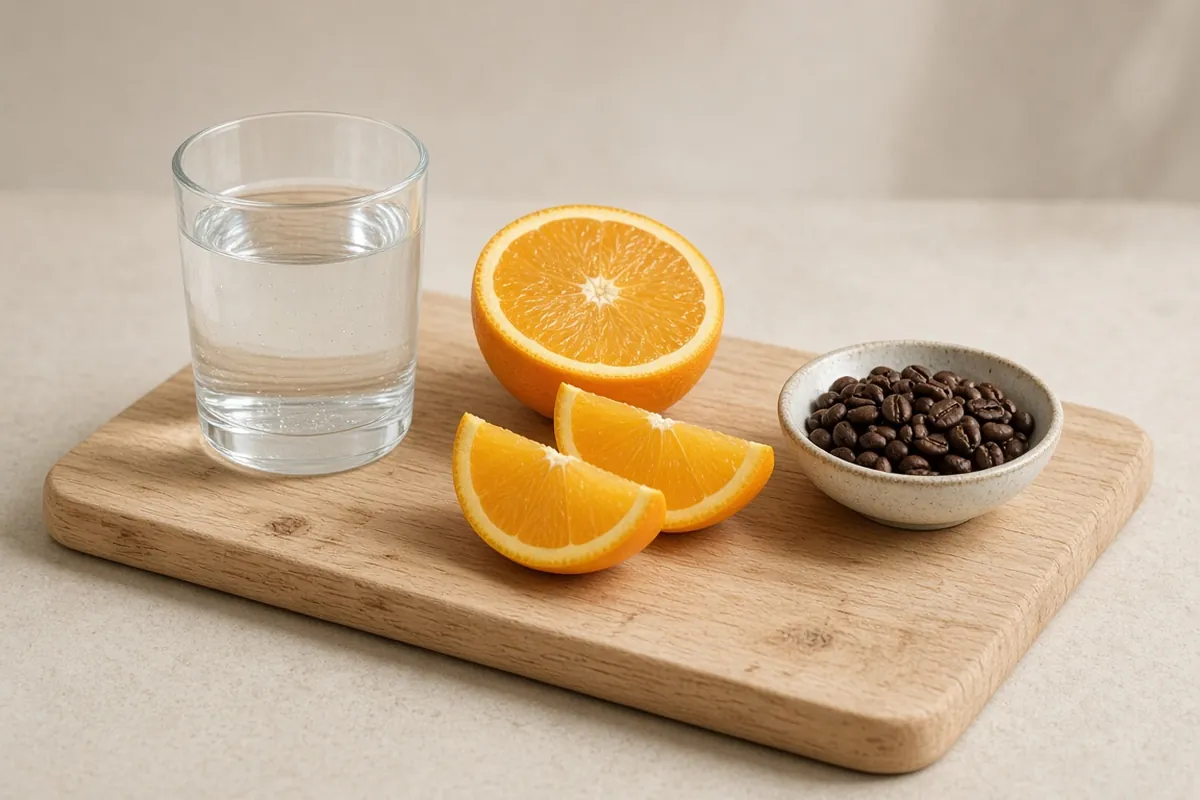
Practical controls for a small sensory tasting: blind randomized presentation, at least two tasters for QC checks, and 30 mL pours at 20°C.