Choosing between a duo trio test and a triangle test? Start with the reference arrangement, then consider statistical efficiency and product suitability.
Duo-trio is statistically less efficient than the triangle test. Compared with triangle testing, duo-trio is easier for assessors to perform.
Use the comparison below alongside our product experience guides.
Duo-trio vs triangle at a glance
| Decision point | Duo-trio | Triangle |
|---|---|---|
| Sample presentation | Duo-trio labels one sample as the reference and marks the other two with different codes. | Each triangle-test sample is marked with a different code. |
| Correct guess | The duo-trio probability of a correct guess is 1/2. | The triangle probability of a correct guess is 1/3. |
| Attribute identification | Duo-trio does not identify the attributes responsible for the difference. | Triangle testing does not identify the attributes responsible for the difference. |
What does the reference change?
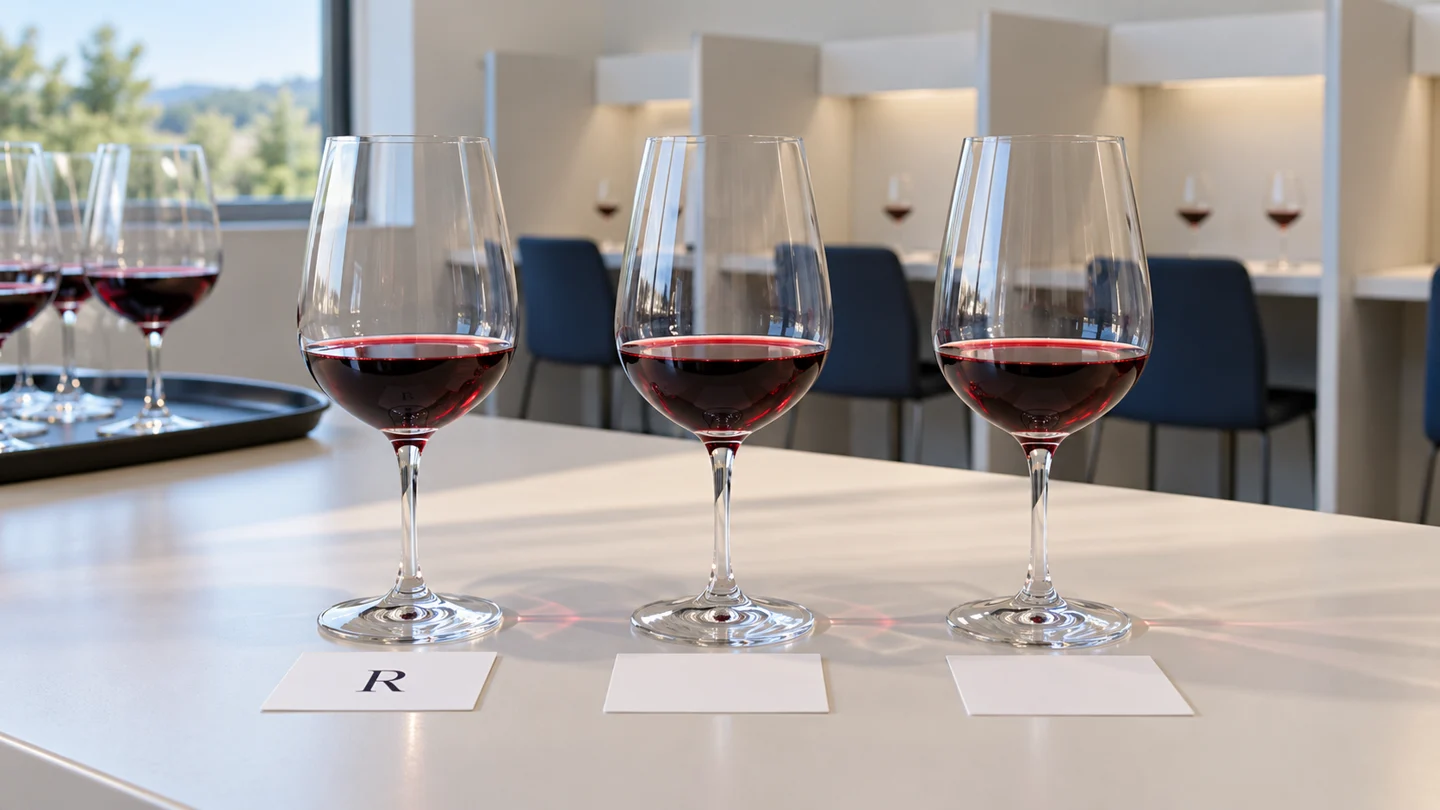
The duo-trio method is a forced-choice procedure. Duo-trio labels one sample as the reference and marks the other two with different codes.
For a wine example, follow the matching task: One coded wine is the same as the reference wine. In the wine duo-trio method, assessors evaluate the reference before the test samples. In the wine duo-trio task, the assessor selects the test sample matching the reference. In the wine duo-trio task, assessors must guess if no difference is perceived.
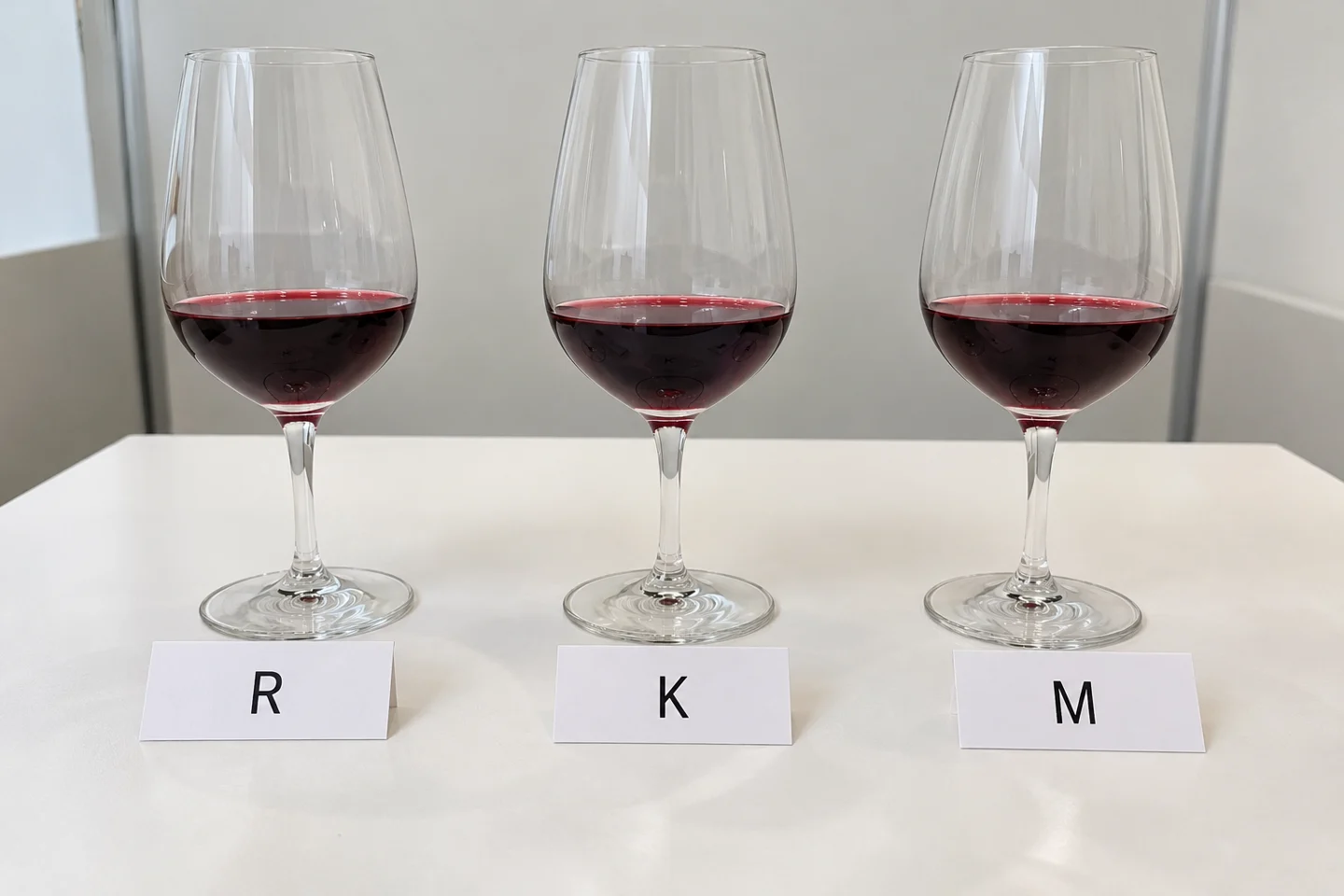
The duo-trio arrangement identifies the reference and gives the other samples different codes.
Constant or balanced reference?
The constant-reference technique is used when one product is familiar to the assessors. The constant-reference arrangement uses the same reference sample.
The balanced-reference technique is used when neither product is more familiar. In the balanced-reference arrangement, half of participants receive one reference and the other half a different reference.
Record which reference arrangement you intend to use and why. Keep the familiarity question explicit in your selection notes.
What changes in the triangle task?
In the wine triangle method, the test presents three coded samples. In the wine triangle method, tasters assess all three samples and pick the odd sample.
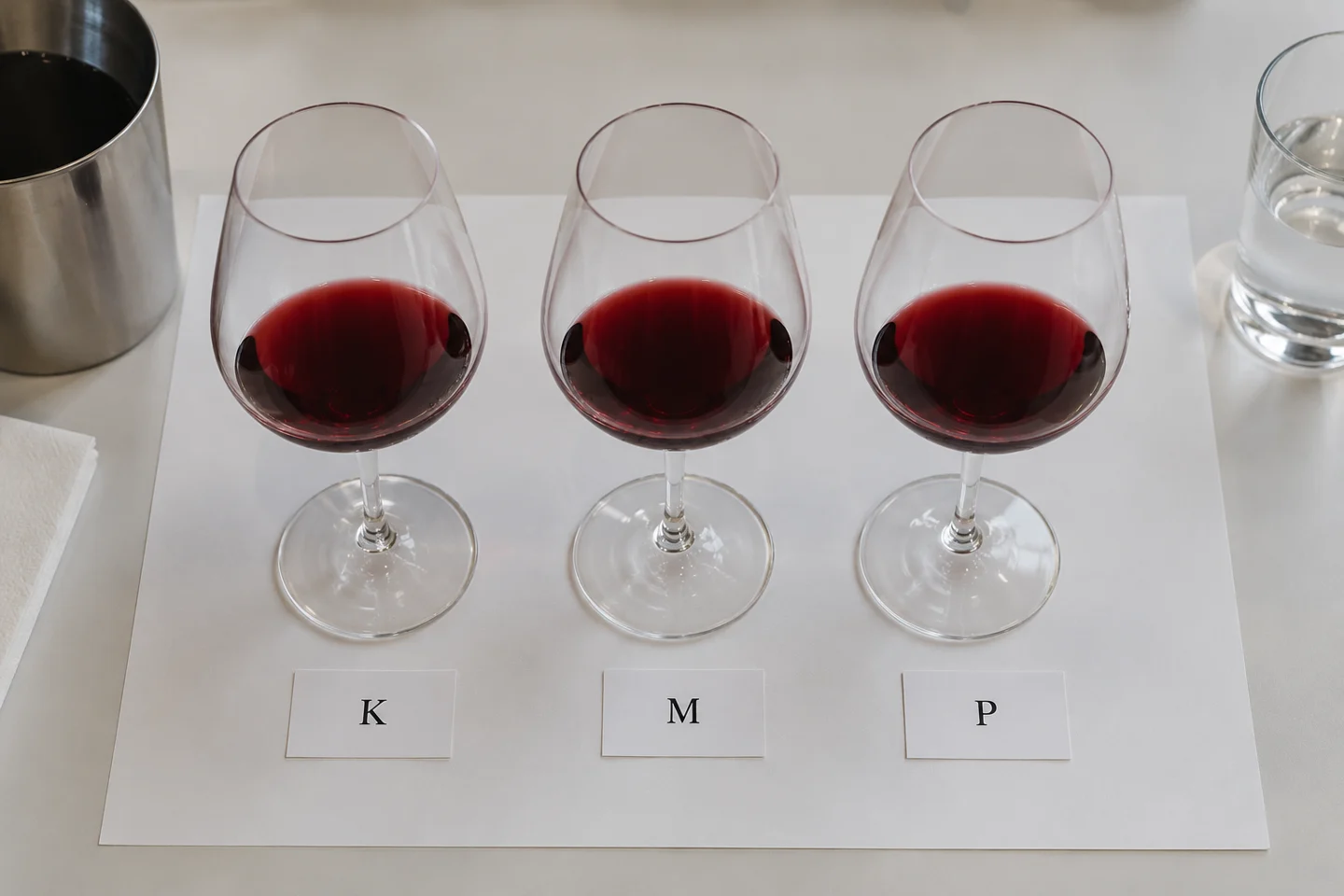
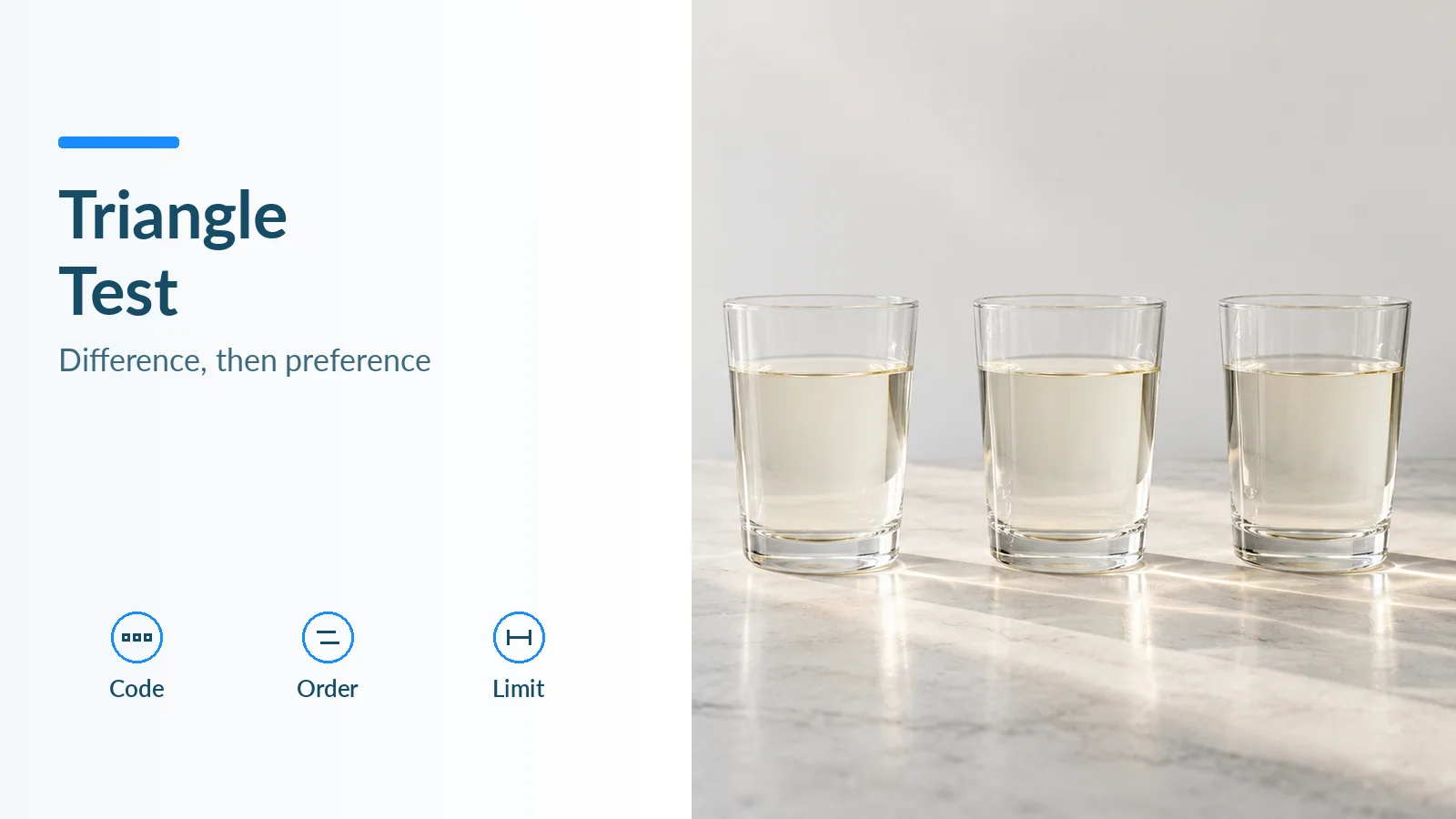
Each triangle-test sample is marked with a different code.
All assessors shall be familiar with the mechanics of the triangle test. Triangle-test samples shall be prepared out of sight of the assessors and in an identical manner. Assessors shall not be able to identify the samples from the way in which they are presented.
For the execution details, continue to the triangle-test sensory evaluation protocol.
How should you use the guessing probabilities?
The duo-trio probability of a correct guess is 1/2. The triangle probability of a correct guess is 1/3.
Keep the correct-guess probability and the panel-planning question separate in your test brief.
Triangle-test assessor numbers are chosen for the required sensitivity. For triangle testing, larger assessor numbers increase the likelihood of detecting small product differences.
Write down the sensitivity you need before settling the assessor count.
Does duo-trio solve carryover fatigue?
Duo-trio testing applies only when products do not cause excessive sensory fatigue, carryover, or adaptation. Triangle testing applies only when products do not cause excessive sensory fatigue, carryover, or adaptation.
Check this suitability boundary for the product before choosing the method.
For red wines assessed by palate, duo-trio can be better than triangle testing because of less taster fatigue. The AWRI red-wine comparison says duo-trio requires more tasters.
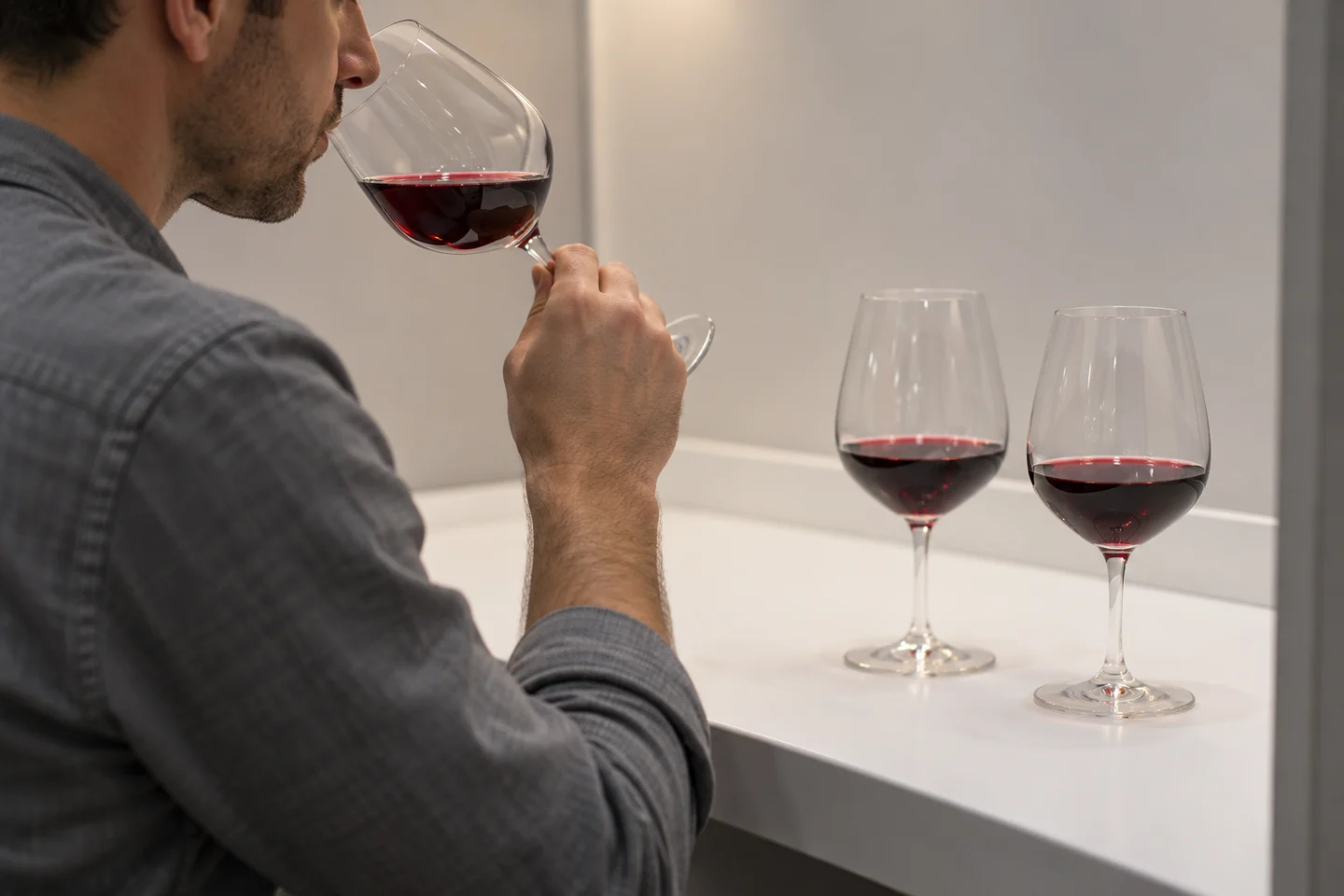
Duo-trio can be better for assessing red wines by palate because of less taster fatigue.
Check product homogeneity too
Duo-trio applies only to fairly homogeneous products. For duo-trio, descriptive analysis may be more appropriate when same-product samples can often be distinguished. For triangle testing, descriptive analysis may be more appropriate when same-product samples can often be distinguished.
Method-selection checklist
Use these questions to finish your comparison and write the test brief.
- What is the objective: difference or similarity?
- Is a product already familiar to the assessors?
- Which reference arrangement will you use if choosing duo-trio?
- Have you checked product homogeneity and the fatigue, carryover, and adaptation boundary?
- What sensitivity do you need, and how will you choose the assessor count?
Keep the objective explicit: Difference testing initially assumes products are indistinguishable. Similarity testing initially assumes products are meaningfully different.
For a wine-focused planning companion, use the sensory test design checklist.
Sources
- International Organization for Standardization — Sensory analysis: Duo-trio test.
- International Organization for Standardization — Sensory analysis: Triangle test.
- ASTM International — Sensory Analysis: Duo-Trio Test.
- ASTM International — Sensory Analysis: Triangle Test.
- Australian Wine Research Institute — Duo-trio.
- Australian Wine Research Institute — Duo-trio tasting sheet.
- Australian Wine Research Institute — Triangle.
- Australian Wine Research Institute — Practical sensory evaluation in the winery.
- Cornell University — Orthonasal, retronasal, and oral-cavity-only study.