
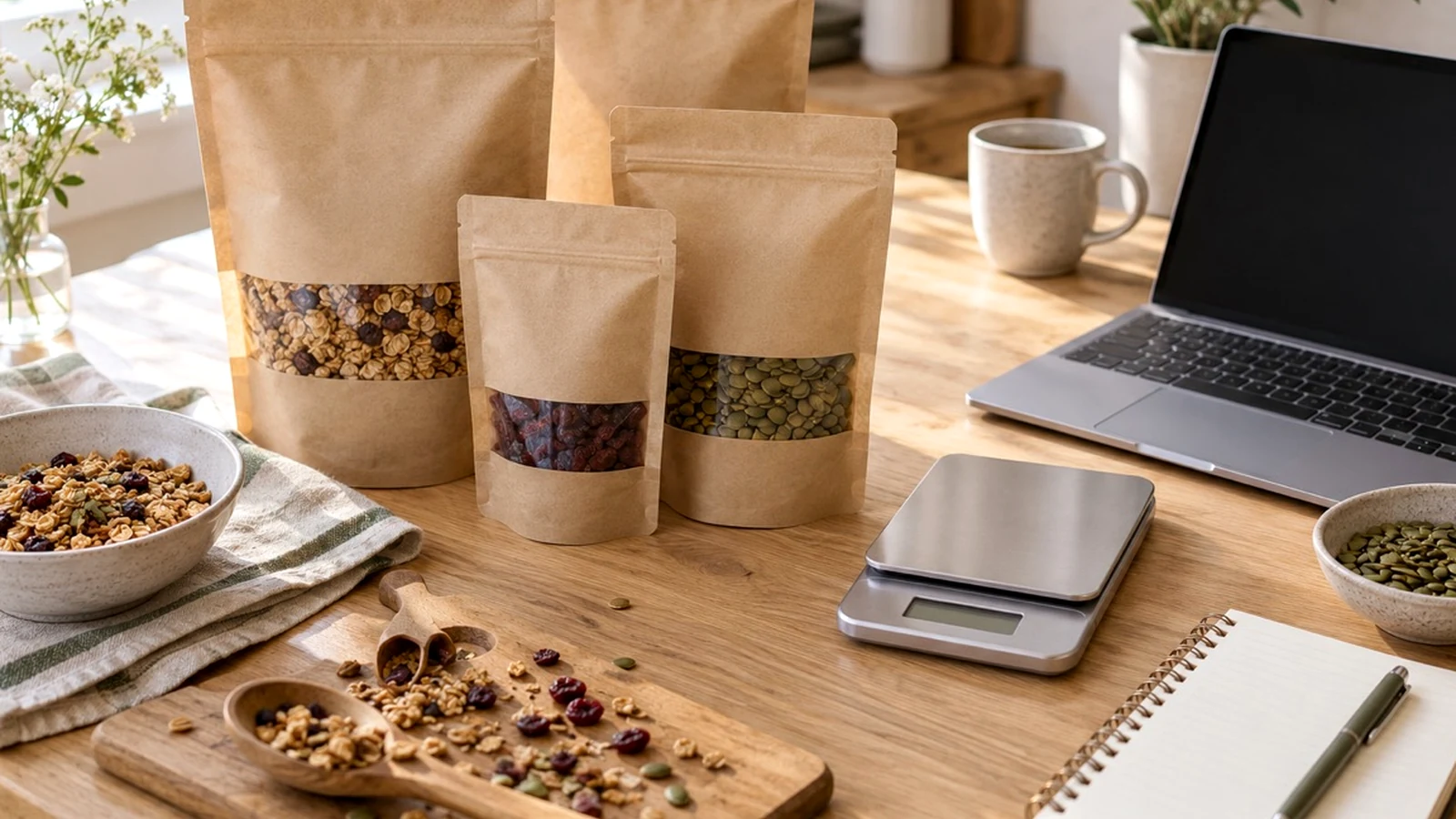
Just-About-Right (JAR) Scale: Penalty Analysis & Mean Drop
Learn how a just about right scale pairs with overall liking in penalty analysis, how to calculate mean drop and weighted penalty, and when to reformulate.
Section
What touch and appearance add to a tasting, and how a small test keeps those clues from leaking in.

Read the texture page before the test checklist. Both stay inside the wine pages they cite.
Texture is not a taste keeps mouthfeel and visual expectation beside, not inside, the five tastes. A checklist for a small sensory test copies the controls an institute page names for wine, with the numbers attached to wine.
Learn how a just about right scale pairs with overall liking in penalty analysis, how to calculate mean drop and weighted penalty, and when to reformulate.

Plan your descriptive sensory analysis panel: explore lexicon development, reference standards, scale calibration, pilot evaluation and performance checks.

Compare the duo trio test and triangle test: reference arrangements, correct-guess probabilities, carryover limits, and a method-selection checklist.
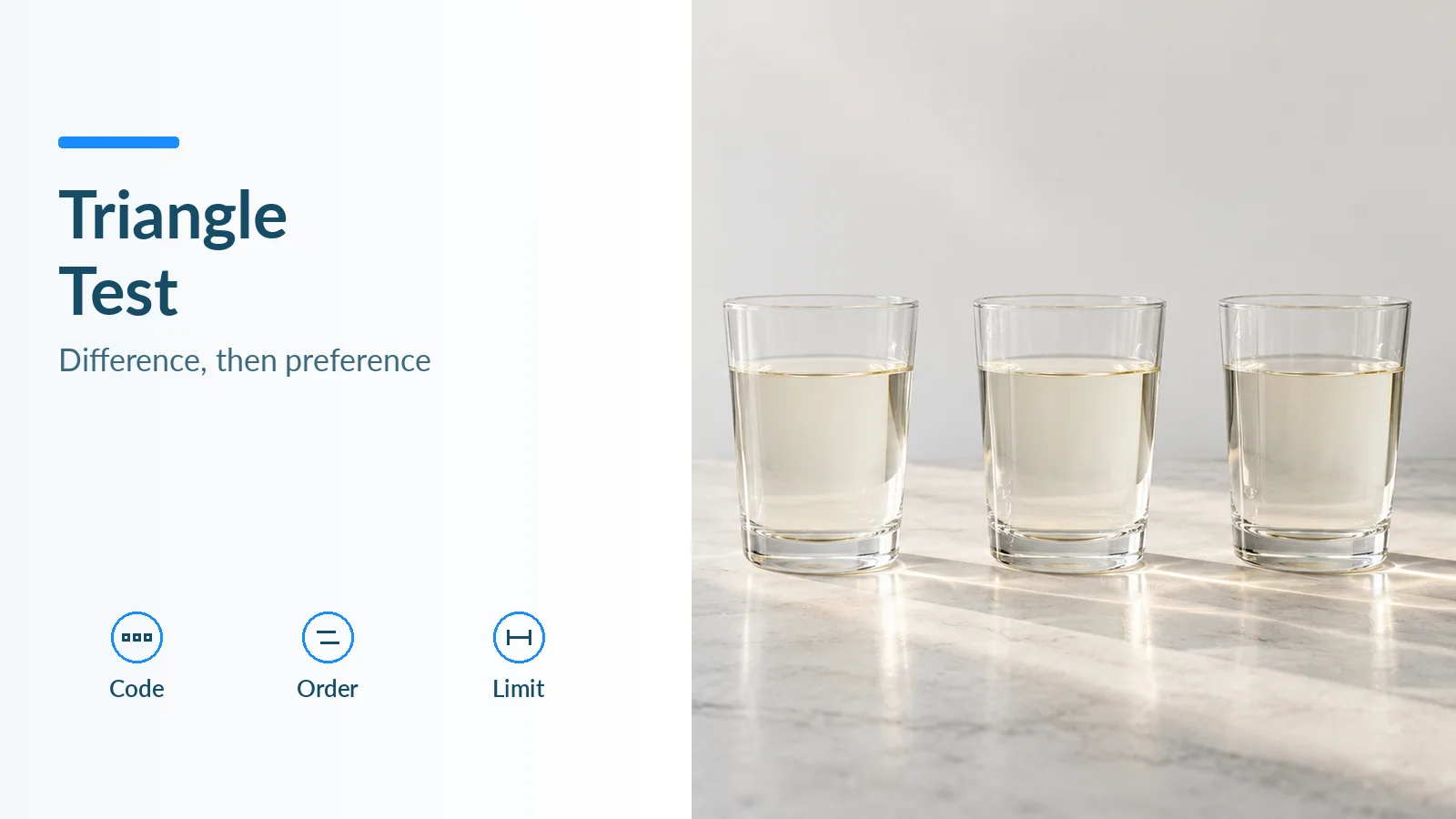
Plan a forced-choice triangle test with hidden sample identities, controlled presentation, and a clear boundary between discrimination and consumer preference.

Practical controls for a small sensory tasting: blind randomized presentation, at least two tasters for QC checks, and 30 mL pours at 20°C.
Wine pages treat astringency and appearance as separate from the five tastes. They do not predict a product's feel.