A small tasting goes wrong when people can see the answer, hear a neighbour, or judge a preference before anyone has shown a difference.
The Australian Wine Research Institute’s considerations page says tasters should taste blind, at least two people should judge quality-control checks, and a difference should be established before a preference. The volumes and temperatures on that page are for wine. They are the checklist. They are not a template for a cream or a pouch, and this site has not run the tasting.
The section is product experience. Which sense a question is even about is on the smell and taste page.
The controls, as that page states them
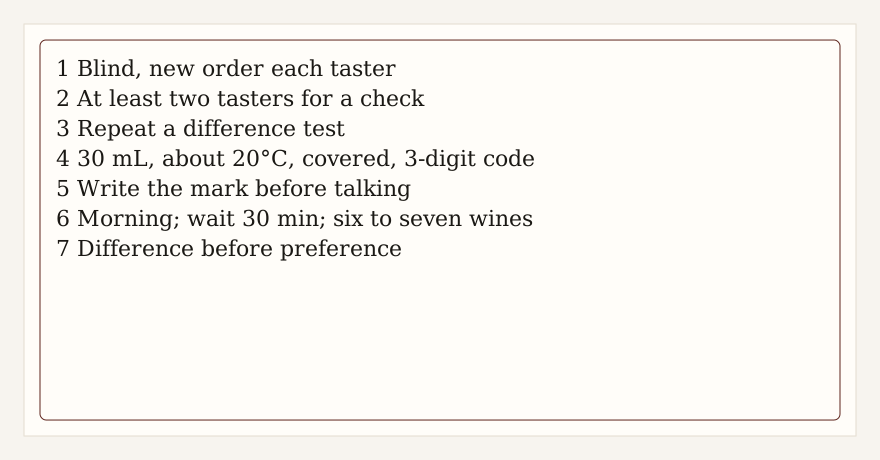
| Control | What the page says |
|---|---|
| Blind identity | Tasters should not know which wine is which. Order is randomised and different for each taster. |
| Two people for a check | Quality-control checks, such as additive-taint screening or cork-taint checking, need at least two tasters with strength in that check. If they disagree, more rigorous testing may be needed. |
| A repeat | One pass at a difference test can be a guess. Repeating the same comparison in a new order adds responses. |
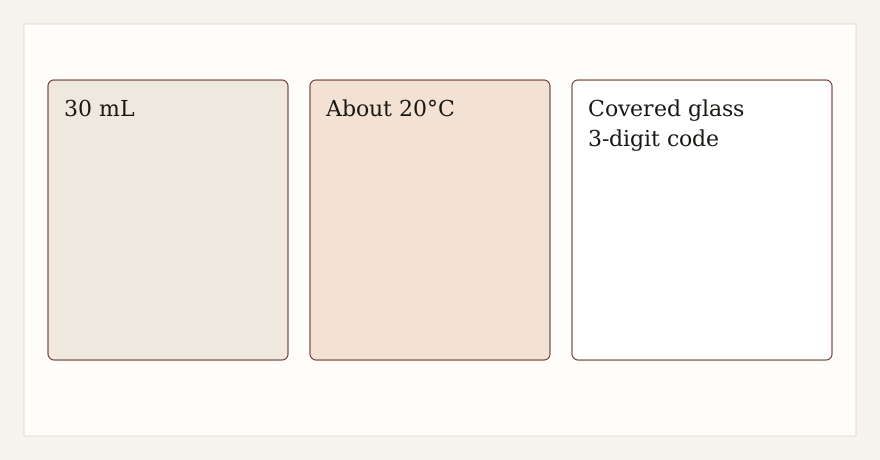
| Presentation | Ideally pre-poured at a constant 30 mL and about 20°C, into covered glasses coded with three-digit random numbers, in an order that differs by taster. Taste within a set period, for example one hour; if not, repour, and not by the taster. |
| Silence until the mark is written | Tasters should not communicate until the judgement is written down. Isolation is preferred. If they share a room, they should at least face away and avoid eye contact. |
| The person that day | The page recommends morning assessments, and no tasting for at least half an hour after smoking, eating or drinking. It suggests a maximum of six to seven wines in a session, then a short rest. |
| Difference before preference | If people cannot reliably find a difference, a preference is meaningless and probably chance. |
The page notes that sensitivity to aroma and flavour compounds varies a lot between tasters. It gives an example, not a measured threshold: someone may have a high threshold for Brett compounds and still be sensitive to cork taint or oxidation. It says staff beyond winemakers can taste if they know the test and if their strengths and weaknesses have been evaluated. It points to Australian Standards for more detail and says to contact the institute library. Those standards were not opened for this page, so they are not quoted.
What would be a false copy
Pouring 30 mL of a lotion, or capping a session at six or seven packs, is not what the page said. The 30 mL, the 20°C and the six to seven wines are wine instructions. A coffee valve or a cap torque answers a different question; those notes are on the valve page and the torque page.
Use the table as the list of controls to ask about when the product is wine. For anything else, keep the questions (hidden identity, written judgement, difference before preference) and leave the wine numbers blank.