
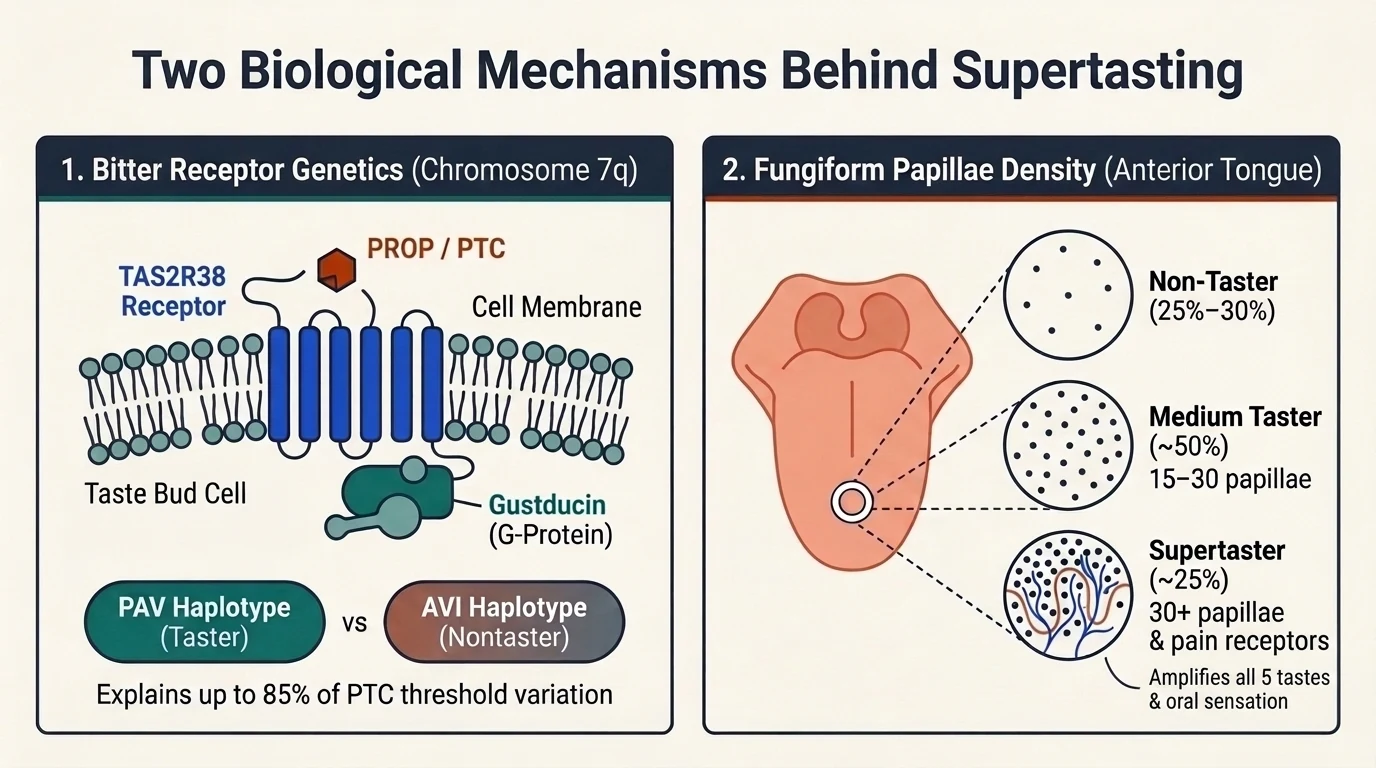
What Is a Supertaster: Bitter Receptors & Papillae
A supertaster has heightened sensitivity across all five tastes, shaped by TAS2R38 bitter receptor genetics and dense tongue fungiform papillae.
Section
How published explainers separate smell, taste and flavour, and where those accounts stop.

The distinction page uses two wine explainers. It is not a diagnosis of smell or taste loss.
Odor threshold: detection versus recognition compares panel questions, concentration steps and the meaning of a threshold result. Smell is not the same sense as taste separates orthonasal smell, retronasal flavour and the five tastes named on the page.
A supertaster has heightened sensitivity across all five tastes, shaped by TAS2R38 bitter receptor genetics and dense tongue fungiform papillae.
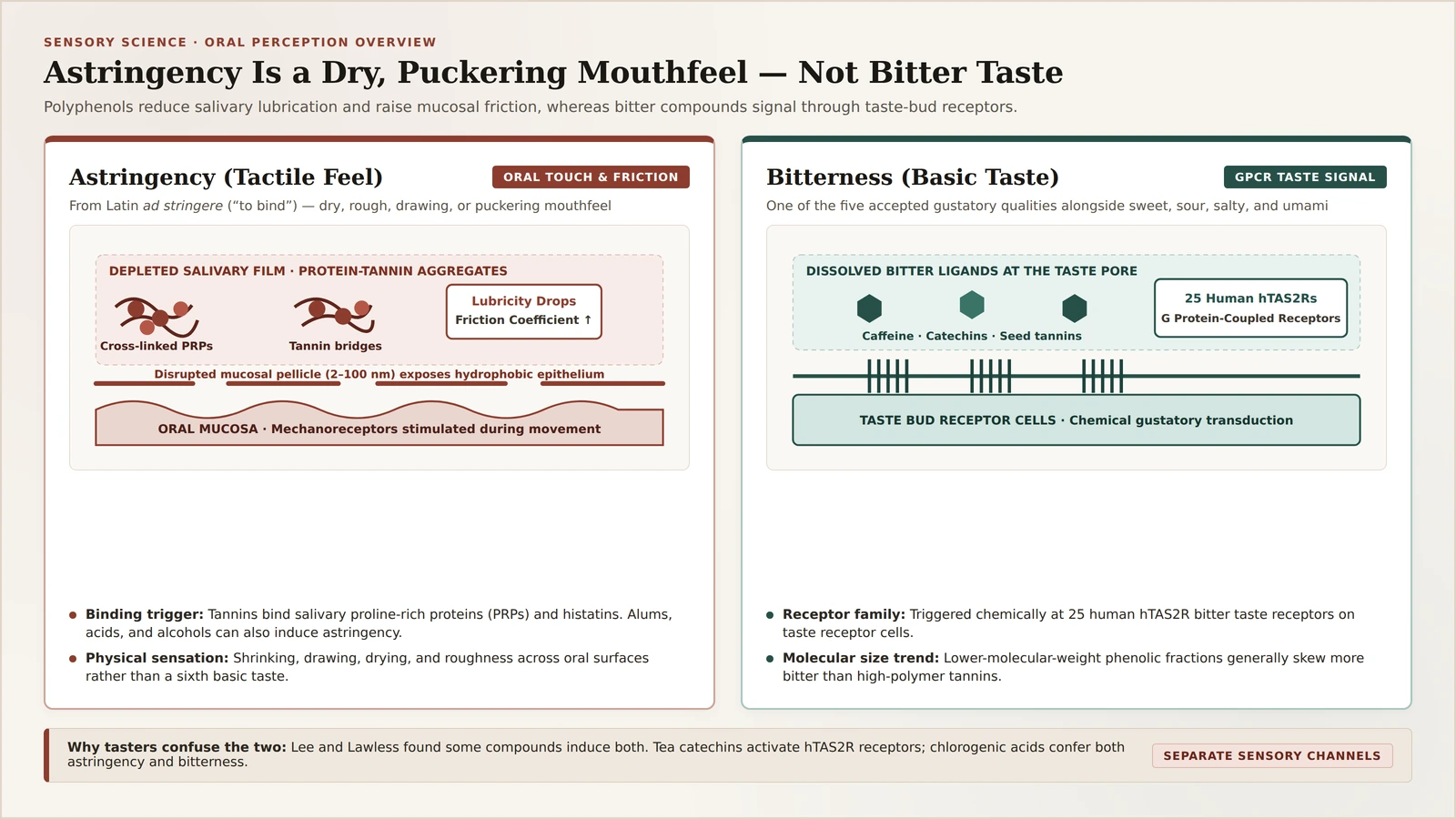
Astringency is the dry, puckering mouthfeel that follows when polyphenols bind salivary proteins and oral friction rises. It is separate from bitter taste.

Detection finds an odor difference; recognition identifies its character. Compare panel questions, concentration steps and how to read an odor threshold report.
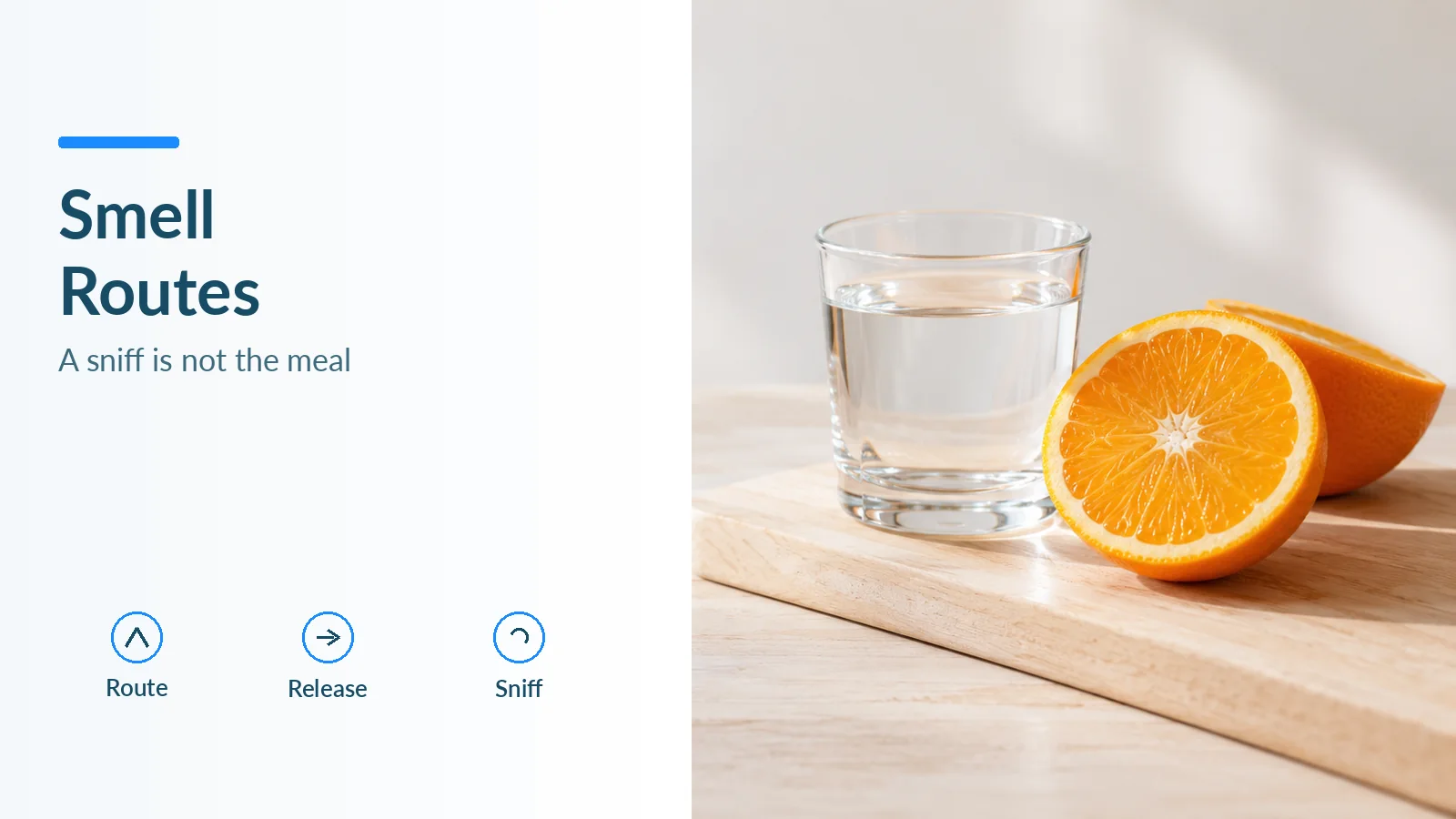
Separate external sniffing from aroma reaching the nose during eating, and see why food aroma release and perceived intensity can move in different directions.
Two wine explainers separate smell at the nose, smell from the mouth, and five tastes. They do not diagnose smell loss.